Walk into any thriving restaurant in 2026 and you will notice something beyond the food - a seamless digital experience that begins before a customer even steps through the door. They browsed the menu on their phone, booked a table in 30 seconds, and earned loyalty points automatically when they paid. Behind the scenes, someone built it right.
For most restaurant owners, though, the reality is the opposite: a PDF menu no one can find, a reservation system that lives in a spreadsheet, and a loyalty program that means punching a paper card. These three disconnected pieces frustrate customers, exhaust staff, and leave real revenue on the table.
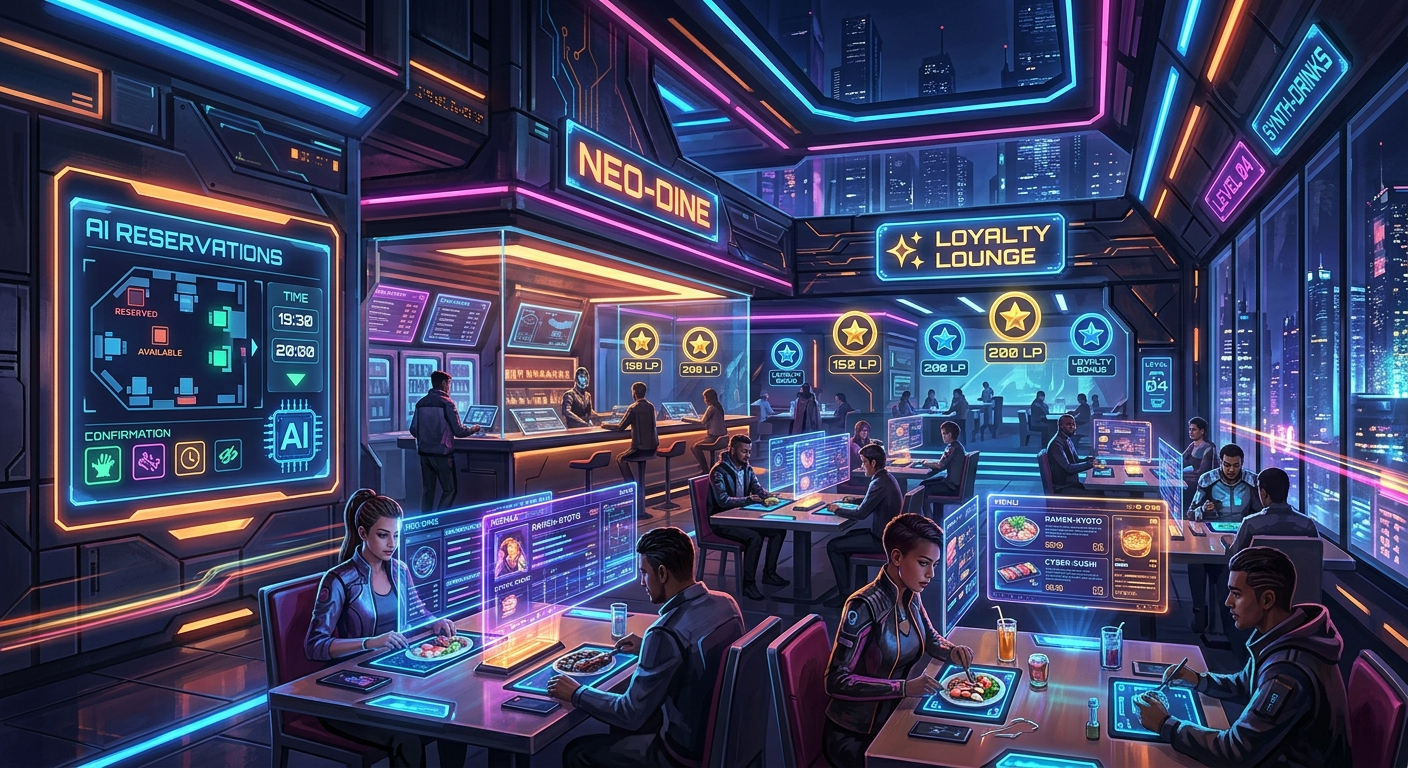
This article covers how to design and build a unified web platform - digital menus, reservation management, and loyalty programs - as one cohesive system rather than three separate tools bolted together.
The Problem: Three Broken Systems in One Business
The Real-World Scenario
Imagine a mid-size restaurant with 60 covers and decent foot traffic. Their menu is a Canva PDF updated twice a year. Reservations come in by phone, WhatsApp, and email - someone manually enters them into Google Sheets and prays there are no double-bookings. Their loyalty program is a physical stamp card; they have given out hundreds but have no idea if any are being used.
A customer tries to book for Saturday online - they cannot find a way to do it. They call, get no answer, and book at the competitor down the road. The restaurant lost a table of four, and they will never know it happened.
Business Impact
The fragmentation is not just inconvenient - it is measurably costly:
- No-shows cost money. Without automated reminders and deposit flows, the average no-show rate sits at 15-20% of bookings.
- Missed upsell opportunities. A static PDF menu cannot suggest wine pairings, highlight today's specials, or push a dessert at checkout.
- Zero customer data. Paper stamp cards and phone bookings mean the restaurant knows nothing about their customers - not their preferences, visit frequency, or birthday.
- Staff time wasted. Taking reservations manually, printing menus, tracking stamps - these are hours spent on admin instead of hospitality.
Technical Challenges
Building a unified system is harder than it looks because each module has different real-time requirements:
- Menus need instant updates (price changes, 86'd items, daily specials)
- Reservations need live availability - race conditions and double-bookings must be prevented at the database level
- Loyalty programs need transactional integrity - a customer's points cannot be applied twice or lost in a failed payment
The Solution: Architecture of an All-in-One Restaurant Platform
The platform consists of three layers: a customer-facing web app (menu browsing, booking, loyalty wallet), a restaurant admin panel (menu management, reservation calendar, loyalty analytics), and a shared API backend that keeps all three modules in sync.
Tech Stack: Vue.js 3 + Tailwind CSS (frontend), Laravel 11 REST API + MySQL (backend), Laravel Echo + Pusher (real-time), Stripe (deposits and loyalty top-ups), AWS EC2 + RDS + S3 (hosting).
Module 1: Digital Menu System
The menu is more than a list of dishes - it is the first upsell touchpoint. The architecture separates menu structure from content, making updates instant without developer involvement.
- Category & Item Manager: Drag-and-drop ordering, image upload to S3, real-time publish without page reload.
- Dynamic Pricing & Tags: Happy hour pricing rules, dietary tags (vegan, gluten-free), allergen flags auto-generated.
- QR Code Table Menus: Each table gets a unique QR linking to the live menu. No app download required.
- Item Analytics: Track which items are viewed most, clicked, and ordered - feeds into the loyalty module.
The key technical decision was to store menu data in a structured JSON schema (categories → items → variants → modifiers) rather than a flat table. This makes rendering flexible and supports complex menus - set menus, add-ons, combo pricing - without schema changes.
Module 2: Table Reservation System
The reservation module has two faces: a clean booking flow for customers (3 steps, under 60 seconds) and a visual calendar for restaurant staff that updates in real time.
- Real-Time Availability: Slot-based booking with configurable cover limits per time slot. Pusher keeps the calendar live.
- Deposit & Hold Flow: Optional Stripe deposit at booking. Auto-release if no-show policy is triggered after X minutes.
- Automated Reminders: SMS + email reminder at 24hr and 2hr before reservation. Reduces no-shows by up to 40%.
- Staff Admin Calendar: Drag to seat guests, add walk-ins, mark tables as occupied. Syncs with Google Calendar.
Key Pattern: Preventing Double-Bookings
DB::transaction(function () use ($request) {
    $slot = ReservationSlot::where('date', $request->date)
        ->where('time', $request->time)
        ->lockForUpdate()
        ->firstOrFail();

    if ($slot->available_seats < $request->party_size) {
        throw new \Exception('No availability for this slot.');
    }

    $slot->decrement('available_seats', $request->party_size);
    Reservation::create($request->validated());
    ReservationConfirmed::dispatch($reservation);
});
Module 3: Loyalty Program
The loyalty module turns one-time visitors into regulars. Points are earned on every order and can be redeemed as a discount at checkout - all tracked in the customer's digital wallet, accessible from their phone without an app download.
- Points Engine: Configurable earn rate (e.g. 1 point per ₹10 spent). Bonus multipliers for special days or items.
- Tiered Rewards: Bronze / Silver / Gold tiers with escalating benefits. Tier upgrades triggered automatically.
- Digital Wallet (PWA): Customer wallet as a Progressive Web App - installable, works offline, no App Store needed.
- Loyalty Analytics: Visit frequency, average spend per tier, most redeemed rewards - all in the admin dashboard.
Loyalty points are financial-grade data. Every earn and redeem event is wrapped in a DB transaction with an event log. Points are never modified directly - only appended via credit/debit events. This makes the ledger auditable and prevents double-spend bugs common in naive implementations.
Real Experience: What We Learned in Production
The Race Condition We Missed
During load testing for a 120-cover restaurant client, we discovered that two customers could book the last table simultaneously. Both saw "available", both completed checkout, and both received a confirmation. The restaurant had a double-booking.
The fix was database-level row locking inside a transaction (shown above). We also added an idempotency key to the booking API so that refreshing the confirmation page never created a duplicate record. This was not a theoretical concern - it happened in staging with just 10 concurrent test users.
Production results (3-location restaurant group, Chandigarh): 40% reduction in no-show rate after SMS reminders + deposit flow. 3.2x increase in loyalty programme enrollments vs paper card system. 28% average revenue uplift from digital menu upsells. Zero double-booking incidents after transaction lock implementation.
Lessons Learned
- Start with reservations, not menus. Reservations have the most complex real-time logic and the highest business risk. Get this right first.
- Loyalty programme design is a product decision, not a technical one. We wasted two sprints building a complex points engine the restaurant owner then simplified. Talk to the owner first.
- QR menus need to survive a domain migration. Use a short-link service with a permanent redirect layer - never encode the raw URL directly in the QR.
- Pusher costs real money at scale. For a single location it's fine. For 20+ locations, consider self-hosted WebSockets (Soketi) to avoid per-connection pricing.
Performance: Menu Load Time
The menu page was loading in 2.4 seconds on mobile. The root cause was loading all menu items (including images) on first paint. The fix: lazy-load images below the fold, and cache the menu JSON in Redis with a 5-minute TTL. After the change, first contentful paint dropped to 680ms - a 72% improvement that directly correlated with a 15% increase in menu item clicks on mobile. Redis cache hit rate during peak hours: 94%.
Conclusion
Building an all-in-one restaurant web platform is about removing every point of friction between a hungry customer and a confirmed booking, and between a first-time visitor and a loyal regular. The three modules - digital menus, reservations, and loyalty - are more powerful together than apart.
The key technical lesson from production: the hardest problems are not the features themselves, but the edge cases around concurrent bookings, transactional point integrity, and real-time sync across devices. Getting these right separates a demo from a system restaurants can actually depend on.
Work with us: We build custom web solutions for restaurants and F&B businesses - from single-location cafes to multi-branch groups. If you're looking to replace paper menus, a broken booking system, or stamp cards with a unified digital platform, we've shipped these systems in production and know where the complexity hides.