If you are a non-technical founder about to hire your first developer, agency, or offshore team, you are walking into a decision that will shape the next 12 months of your startup. Get it right, you ship a working product. Get it wrong, you burn six figures and a year.
I have spent the last seven years building software for founders - solo founders, two-person teams, funded startups, and SMBs. I have seen the patterns that lead to clean launches and the ones that lead to stalled projects, abandoned codebases, and shouting matches over Slack at 11pm. Here is what I wish every founder knew before they signed their first developer contract.
1. Be Brutally Clear About What You Are Building
The most expensive mistake I see is founders who cannot describe their product in one sentence. They have a vision in their head. They send three Loom videos and a Notion page with 47 bullet points. They expect the developer to "figure it out."
Here is the truth: developers are not mind readers. The clearer your spec, the cleaner the build. Before you hire anyone, you should be able to write down:
- The exact problem your product solves and for whom
- The 3-5 user actions that matter most (e.g. sign up, post, pay, message)
- What success looks like in your first 90 days
- What you are explicitly NOT building (this is harder than it sounds)
If you cannot write that down, you are not ready to hire. You are ready to talk to potential users for two more weeks first.
2. Understand the Three Hiring Models
There are essentially three ways to hire developers, and they each have a sweet spot:
| Model | Best For | Trade-off |
| Freelancer | Small features, prototypes, fixed-scope work under $10K | Disappears when paid. No accountability if things break later. |
| Development agency | MVPs, full products, ongoing development | Higher hourly rate. But team continuity, project management, and accountability. |
| In-house developer | Post-PMF startups with funding | $80-200K+ salary. Works only if you have 12+ months of consistent work. |
For most early-stage founders, an agency is the right choice. You get a team instead of a single point of failure, and the cost of stopping is just ending the contract instead of laying someone off.
3. The "Cheapest Bid" Almost Always Costs More
I have rebuilt projects for founders who chose the lowest bid the first time around. Three patterns repeat:
- Hidden technical debt: The code works for the demo but cannot scale. Every new feature breaks two old ones.
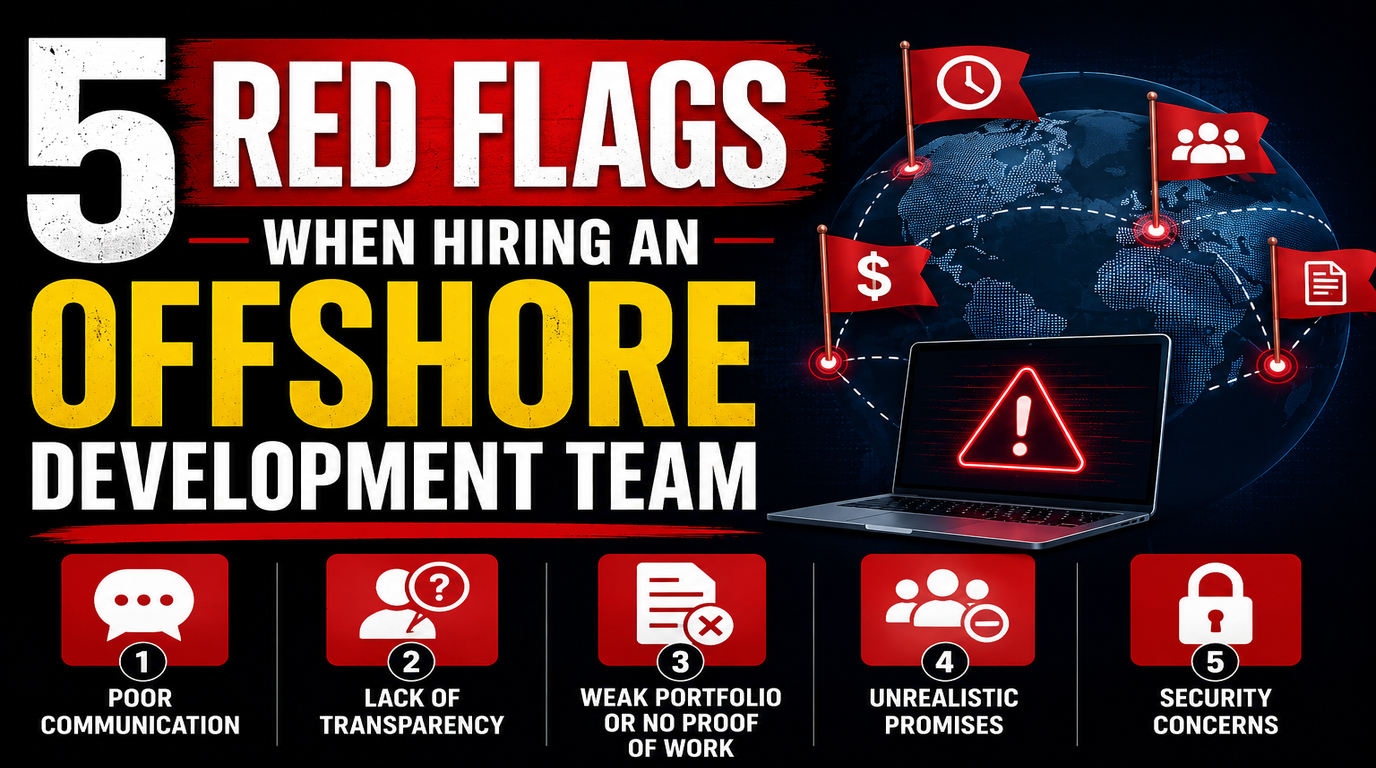
- Communication breakdown: Time zone gaps, language barriers, missing project management. You spend more time clarifying than they spend coding.
- Disappearing teams: The contract ends, the developer disappears, the codebase is undocumented. Your next hire spends two months reverse-engineering it.
A senior team that costs 2x more often delivers 5x the value because they ask the right questions, write maintainable code, and stay accessible after launch.
4. Demand to See Past Work, Not Just Logos
Every agency has a "Our Clients" page with logos. That tells you nothing. What you actually want to see:
- A live URL of something they shipped recently (not a five-year-old project)
- The codebase, if possible (or a sample repo)
- A reference call with a real founder they worked with for at least 6 months
- How they handle a project that goes off the rails - ask for a story
If they cannot show you live, working examples or have no public references, walk away.
5. Pay Attention to Their Questions, Not Their Answers
The discovery call is where you can spot quality fast. A great developer or agency will ask questions like:
- "Who are your competitors and how is this different?"
- "What happens if a user does X edge case?"
- "Are you funded? What is your runway?"
- "What does success look like for you in 6 months?"
A bad one will say "yes" to everything, quote you a price in the first call, and not push back on a single requirement. Run from this. The best technical partners challenge your assumptions before they take your money.
6. Lock Down Scope Before You Lock Down Price
"Build me an Uber for X" is not a scope. It is a wish. Before any contract is signed, you should have a written scope document that includes:
- List of every screen or feature, with specific user stories
- Wireframes or mockups for each major flow
- What technology stack will be used
- What is in scope vs out of scope
- How change requests will be priced
If your developer offers to "just start building" without this document, that is a red flag. Scope creep is the #1 reason projects blow past budget.
7. Insist on Owning the Code From Day One
This is non-negotiable. Your contract should explicitly state:
- You own the source code, the database, the assets, and all IP
- The code is delivered to a repository you control (your GitHub, not theirs)
- You have access to all hosting, domains, and third-party accounts
- You can fire them and continue with another developer without legal blocks
I have seen founders who launched on platforms where the developer "owned" the hosting account. When the relationship soured, they could not migrate without paying ransom. Do not let this happen to you.
8. Plan for After Launch, Not Just to Launch
The day you launch is the day the work begins. Bugs surface, users request features, servers crash at 3am. Before you sign with a developer, ask:
- What does post-launch support look like? Hourly? Retainer?
- How fast can they respond to a critical bug?
- If they leave, who maintains it?
- Is there documentation for someone else to take over?
The cost of post-launch maintenance is typically 15-25% of the original build cost per year. Budget for it from day one.
9. Communication Is the Real Skill
The best developer in the world is useless if they go silent for a week. The signs of a good communicator:
- Daily or weekly updates - structured, in writing, not just verbal
- Specific questions when blocked, with proposed options, not just "I am stuck"
- Documentation of decisions made along the way
- Willingness to push back when you ask for something that will hurt the project
If your developer goes radio silent for days at a time, ends meetings with vague "I will look into it" - you have a communication problem that will become a delivery problem within weeks.
10. Trust Your Gut About the Person, Not Just the Resume
Technical skills you can verify in 30 minutes with a code review. Communication, ownership, and judgment - those you sense in the first conversation. If something feels off in the first meeting, do not ignore it. The cost of leaving and finding someone better is always less than the cost of staying with someone wrong.
The Founder Hiring Checklist
Before you sign, you should be able to answer YES to all of these:
- I can describe my product in one paragraph
- I have a written scope with at least basic wireframes
- I have seen 2+ live, recent examples of their work
- I have spoken to 1+ reference about working with them long-term
- I own the code, repo, and all third-party accounts
- I know what post-launch support costs and how it works
- I have a clear communication cadence agreed upfront
- I have a backup plan if it does not work out
The Bottom Line
Hiring developers is not about finding the cheapest hands or the fanciest portfolio. It is about finding a team that can take the half-formed idea in your head and turn it into software that users actually use. That requires technical skill, but it requires communication, judgment, and accountability even more.
At Logic Providers, we have been the development partner for 15+ products and we have also been the team that rebuilt projects after the first developer fell through. If you are about to make this decision and want a sanity check on scope, technology, or budget, we offer free founder consultations - no pitch, no contract, just honest advice from people who have been in the trenches.