For about fifteen years, the answer to almost every business problem was the same: there is an app for that. Need to book a table, send an invoice, track a shipment, schedule a post? Download the app, learn its buttons, click through its screens. In 2026, that answer is quietly changing. Increasingly, the response is "just ask the agent." AI agents - software that understands what you want and then goes and does it across multiple systems - are starting to replace the open-an-app-and-click-around model that has defined business software for a generation.
This is not a far-off prediction. It is happening now, and it is one of those shifts that looks small until it is suddenly everywhere. If you run a business, you do not need to understand the technology to be affected by it. You need to understand what is changing, why it matters, and what to do before your competitors figure it out first.
What "AI Agents Replacing Apps" Actually Means
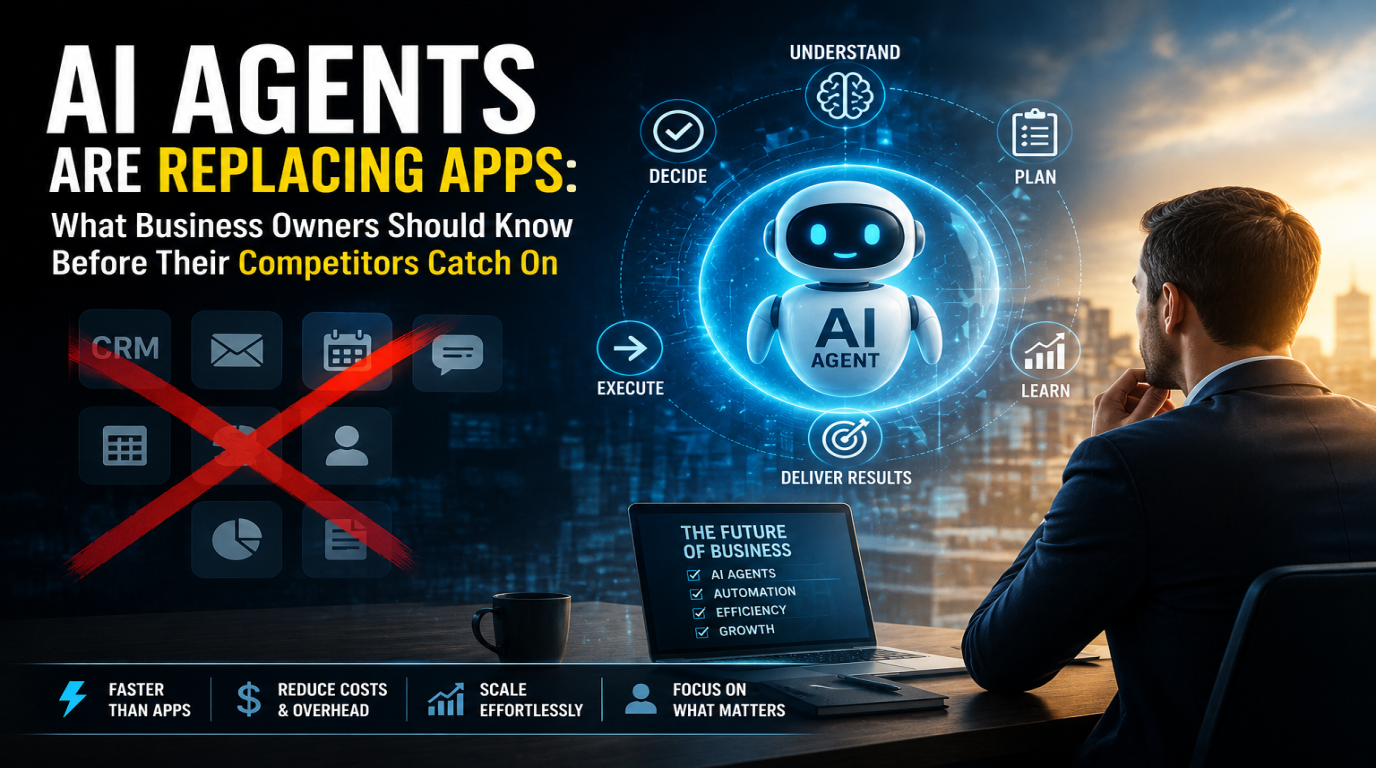
An app is a destination. You go to it, you navigate its menus, and you do the work yourself. An AI agent flips that around. Instead of you going to the software, the software comes to you. You describe the outcome you want in plain language, and the agent figures out which tools to use, in what order, and carries out the steps.
Think about the difference in a simple example. The old way: open your accounting app, find the customer, create an invoice, switch to email, attach it, write a message, send it, then go back and mark it as sent. The agent way: "Invoice Maria for last week's consulting and send it with a friendly note." One sentence, and the agent touches all three systems for you.
The app has not disappeared - the accounting system is still doing the work underneath. But the interface, the thing you actually interact with, has moved from a screen full of buttons to a simple request. That is the shift. The app becomes a service the agent calls, not a place you visit.
Why This Shift Is Happening Now
Agents have been a dream for years. What changed in 2026 is that three things finally lined up:
- The models got good enough to be trusted with multi-step tasks. Earlier AI could answer a question but lost the plot halfway through a real workflow. The current generation can plan, use tools, check its own work, and recover from mistakes well enough to handle genuine tasks.
- A standard way to connect AI to real systems arrived. New open standards now let agents plug into your existing tools - your CRM, your calendar, your accounting software - through a common interface instead of fragile custom code. This is the plumbing that makes agents practical rather than experimental.
- Businesses ran out of patience with app sprawl. The average company now juggles dozens of separate tools, each with its own login and learning curve. An agent that spans them is not a novelty; it is relief.
Put those together and you get the tipping point we are living through: agents that are reliable enough, connected enough, and useful enough to change how work gets done. It is worth remembering that businesses do not even need to build their own AI to benefit - as we covered in how businesses can use AI without building their own model, most of this is now available off the shelf.
What It Looks Like for a Real Business
Strip away the theory and this is where it lands for an ordinary company:
- Customer support stops being a person copying answers between a help desk, an order system, and a knowledge base. An agent reads the full context and drafts an accurate, personal reply in seconds - with a human approving anything sensitive.
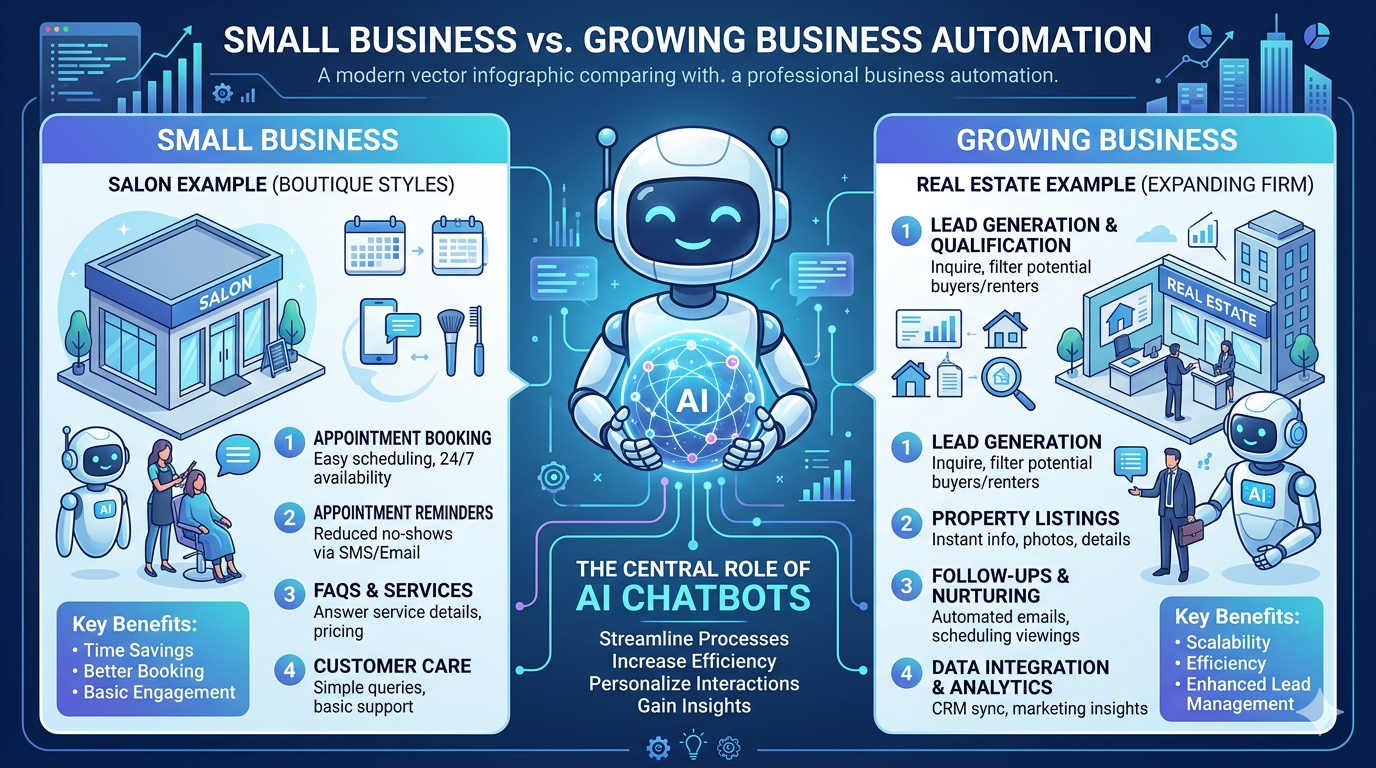
- Scheduling and bookings stop requiring a back-and-forth. The agent checks availability, books the slot, sends the confirmation, and updates the calendar.
- Routine finance work - chasing overdue invoices, categorizing expenses, preparing simple reports - moves from a Monday-morning chore to something the agent has already drafted before anyone sits down.
- Marketing and admin tasks that used to eat afternoons get compressed into a request and a review.
The pattern is always the same: the tedious, cross-system busywork that a person used to stitch together by hand becomes a single instruction to an agent, with people moving up into the role of directing and approving rather than clicking.
The Risk of Waiting
Every major shift in business software has produced two groups: the companies that adapted early and quietly pulled ahead, and the ones that dismissed it until they were behind. The businesses that ignored websites, then mobile, then cloud, all learned the same lesson late and at a higher price.
Agents will follow the same curve. The danger is not that an agent does something dramatic overnight. It is subtler: a competitor down the street starts responding to customers in minutes instead of hours, quoting faster, following up more consistently, and running leaner - not because they hired more people, but because an agent is handling the work that still ties up your team. By the time that gap is obvious in your numbers, they have a real head start.
What You Should Do Before Your Competitors Catch On
You do not need to overhaul your business or fire anyone. You need to move deliberately. A sensible starting playbook:
- Find your most repetitive cross-tool workflow. The task your team does constantly that involves hopping between three or four systems is almost always the best first candidate for an agent.
- Start with draft-and-approve, not full autonomy. Let the agent do the work and prepare the action, but keep a human approving anything that spends money, sends messages, or changes records. You get the speed without the risk.
- Insist on guardrails from day one. Scoped permissions, its own limited login, and a log of everything it does. An agent should be treated like a capable new hire, not handed the keys to everything at once.
- Measure the time saved. Pick one workflow, track the hours it used to take, and compare. Real numbers tell you where to expand and where to stop.
- Pick a partner who has done it before. The gap between a flashy demo and an agent that works reliably inside your real systems is where most projects fail. Experience matters here.
The Bottom Line
Apps are not vanishing tomorrow, and nobody is suggesting you throw out the software that runs your business. What is changing is how people interact with it. The screen full of buttons is slowly being replaced by a simple request to an agent that knows how to press those buttons for you. That change makes fast, responsive, lean operations available to small businesses in a way that used to require a much bigger team.
The owners who understand this early will spend 2026 quietly building an advantage - responding faster, doing more with the same headcount, and freeing their people for work that actually needs a human. The ones who wait will eventually adopt the same tools, just later, and from behind. The technology is ready. The only real question is who moves first.
At Logic Providers, we help business owners put AI agents to work on real, everyday operations - safely, with the right guardrails, and starting with the workflows that will save you the most time. If you want a straight answer on where an agent could help your business and where it is not worth it yet, we are happy to take a look for free.