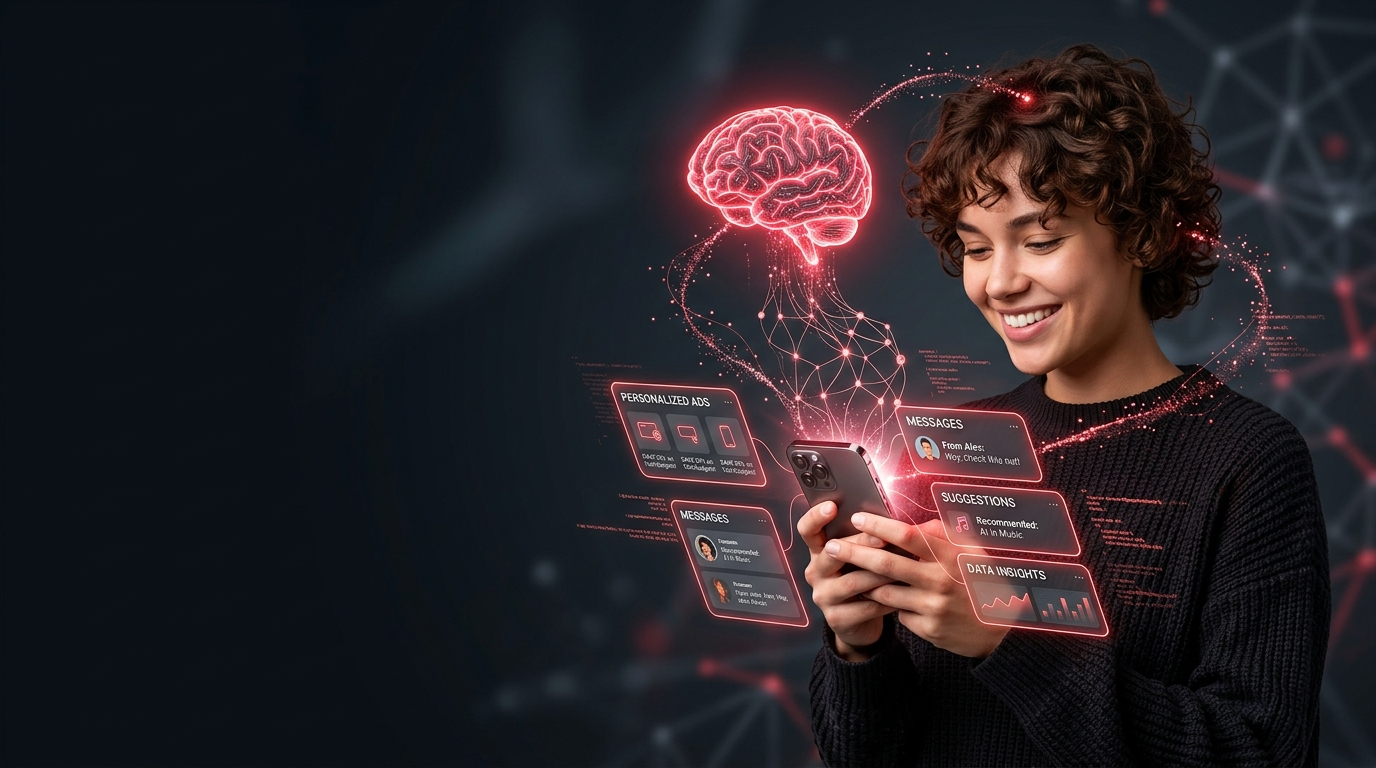
Think about the last time an app felt like it really knew you. Maybe Spotify played a song you hadn't heard in years and it was exactly right. Maybe Amazon showed you a product you were about to search for anyway.
That feeling - "this app gets me" - doesn't happen by accident. It's the result of AI personalisation: a system that watches what users do, learns what they like, and changes what it shows based on that. Netflix has said its recommendation engine saves it over a billion dollars a year in potential subscriber cancellations. Amazon attributes roughly 35% of its total revenue to its recommendation system.
The Problem With Apps That Treat Everyone the Same
A food delivery app shows the same homepage to a vegetarian in Mumbai and a meat-eater in Delhi. A fitness app greets a 60-year-old beginner and a 25-year-old marathon runner with identical content. When an app doesn't feel relevant, users leave - not dramatically, but they just open it less.
Apps lose on average 77% of their daily active users within the first three days of install. By day 30, over 90% of users are gone. Most didn't have a bad experience - they just didn't have a reason to stay. Personalisation changes this. When the app shows something relevant on the second visit, users are more likely to make a third.
What AI Personalisation Actually Is
AI personalisation works by collecting signals about what a user does - which products they viewed, what they searched for, how long they read an article, when they open the app - and using those signals to make better decisions about what to show next. Together, over time, these build a picture not of what a user says they like, but of what they actually do. AI learns from the doing.
The Three Things Personalisation Can Change
- What they see - The homepage, recommendations, and "you might also like" sections show content that fits this particular person's history and interests.
- When they see it - The best time to send a push notification isn't the same for every user. Someone who opens the app every morning at 8am should get notified at 8am, not at noon.
- How much they see - A power user who's been on the app for two years doesn't need the same onboarding hints as a new user. Personalisation removes friction for experienced users while keeping things simple for beginners.
How It Works in Practice
Collaborative Filtering
If two users have similar behaviour - they bought the same things, watched the same content - things one of them likes are probably worth showing to the other. This is how Spotify's Discover Weekly works. Your listening history is compared to millions of other listeners, and when someone with similar taste loved a song you haven't heard, Spotify puts it in your playlist.
Content-Based Filtering
Instead of comparing you to other users, this looks at your own history and finds patterns in what you personally engage with. If you've watched five action movies, the system notes that and recommends more. This works well even for new users if you ask the right questions upfront - a fitness app that asks about goals and experience on day one can start personalising immediately, before it has any usage data at all.
Real-Time Personalisation
Someone opens a shopping app and searches for "running shoes." Even if the app has never seen this user before, it now knows something: right now, this person is thinking about running. For the rest of the session the app can surface running socks, sports bottles, and fitness trackers - without the user searching for each one separately.
Real Results From Real Apps
A Food Delivery App
A food delivery platform showed every user the same three homepage sections regardless of history. After introducing simple personalisation - showing each user's preferred cuisine first, surfacing "Quick Lunch Options" during lunch hours - the results after 60 days: session time up 28%, homepage click-through up 41%, repeat orders within seven days up 19%.
A Learning App That Fixed Drop-Off
The app taught everyone the same first lesson regardless of experience. After a three-question quiz on signup - current level, goals, time availability - users were routed to different starting points. Day-7 retention went from 23% to 41%. Users given an advanced starting point were twice as likely to still be active at the end of month one.
Push Notifications People Actually Welcome
One retail app moved from a fixed 6pm send to behaviour-based notification timing - notifications sent 30 minutes before each user's most common active window. Open rates went from 4% to 17%. Opt-out rates fell by 60%. The notifications didn't change. Just the timing - matched to each person's natural rhythm.
Where to Start
Stage 1 - Collect the Right Signals
Before you can personalise anything, you need data: what users viewed and for how long, what they searched, what they bought, when they use the app. Log this from day one. You can't go back and collect history you didn't capture - and many apps that try to add personalisation later find this is their biggest blocker.
Stage 2 - Start With Rule-Based Personalisation
Before introducing machine learning, there's a lot you can do with simple rules: "if a user has bought from the fitness category three times, show them fitness content first." No AI needed - just logic. Rule-based personalisation is fast to build and gives you a baseline to compare against later.
Note: A recommendation engine trained on 500 users won't work well. Start with rules. Graduate to ML-based recommendations when you have at least 10,000 active users with meaningful interaction history. The order matters.
Stage 3 - Use Existing AI Tools
Once you have enough data, layer in machine learning - but you almost certainly don't need to build a model from scratch. AWS Personalise, Google Recommendations AI, and Recombee can take your user data and generate recommendations without a data science team. For push notification timing, tools like Braze and CleverTap analyse individual user behaviour and determine the optimal send time per person automatically.
What Goes Wrong
Too aggressive too fast. There's a line between "this app knows what I like" and "this app knows too much about me." Personalisation should feel like a helpful coincidence, not surveillance.
The filter bubble problem. If you only ever show users what they've already shown interest in, they never discover anything new. Build in a percentage of "explore" results - things outside the user's established pattern. The surprise element is intentional.
Not explaining why. "Recommended because you bought running shoes" is much better received than a list that just appears. Users trust personalisation more when they understand it - and they can correct it when it's wrong, making the system smarter over time.
Thinking about adding personalisation to your mobile app? Our team has built recommendation systems, personalised notification flows, and adaptive onboarding for mobile apps across e-commerce, food delivery, fitness, and education. We can help you identify where personalisation would have the most impact for your specific product.