SaaS vs Custom Software: What Businesses Should Choose ?
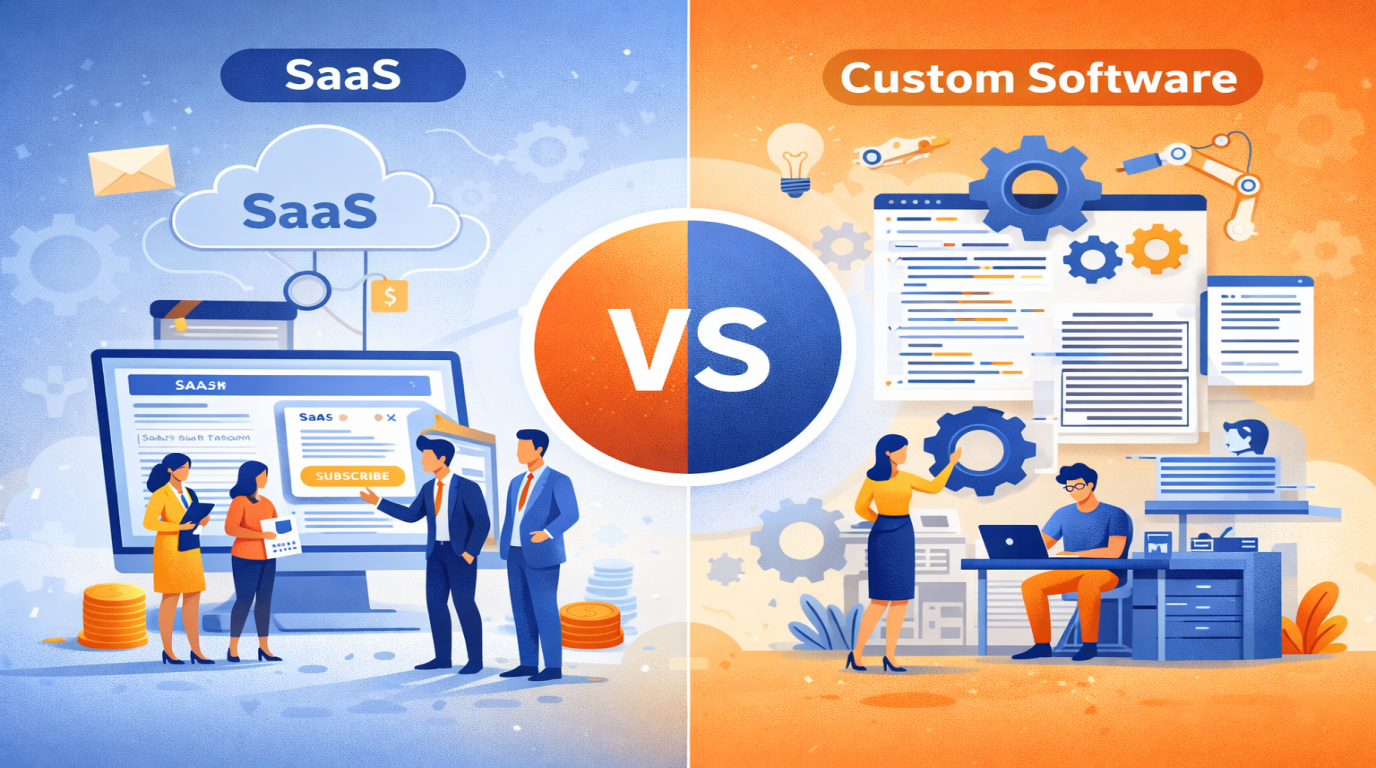
Businesses today rely heavily on software to manage operations, sales, customer relationships, and logistics. One of the biggest decisions companies face is whether to use SaaS software or invest in custom software development.
While SaaS platforms provide quick solutions, custom software offers flexibility and scalability tailored to specific business needs.
So the real question is:
Should your business use SaaS or build custom software?
In this guide, we will break down the differences between SaaS vs custom software, provide real-world examples, and help you understand which option is best for your business.
What is SaaS Software?
SaaS (Software as a Service) is software that is hosted online and accessed through a subscription model. Businesses don't need to install or build the software themselves - they simply subscribe and use it via the internet.
SaaS platforms are designed to serve many businesses with similar needs.
Popular SaaS Examples
Some well-known SaaS platforms include:
- Shopify - E-commerce platform
- Salesforce - Customer relationship management (CRM)
- Slack - Team communication tool
- QuickBooks - Accounting software
- HubSpot - Marketing automation
These tools allow businesses to start quickly without building software from scratch.
Real World Example of SaaS
Imagine you want to launch an online clothing store. Instead of hiring developers and spending months building a website, you can simply create a store on Shopify.
Within a few hours, you can:
- Upload products
- Accept payments
- Manage orders
- Integrate shipping services
- Track sales analytics
This is the biggest advantage of SaaS: speed and simplicity.
What is Custom Software?
Custom software is built specifically for a business to meet its unique processes and requirements. Instead of adapting your business to existing software, custom solutions allow software to adapt to your exact workflow.
Companies typically hire developers or development teams to create these systems.
Real World Example of Custom Software
Large companies often rely on custom-built systems. Examples include:
- Amazon's logistics and warehouse management systems
- Uber's ride matching platform
- Netflix recommendation algorithm
These systems are designed specifically for their business models and cannot be replaced by generic SaaS tools.
Practical Example: SaaS vs Custom Software
Scenario: Growing E-Commerce Business
A small online store starts with a SaaS platform like Shopify. Initially, it works perfectly because the business only processes 20-30 orders per day.
However, as the business grows and starts handling 2,000+ orders daily, they face challenges:
- Complex shipping rules
- Multiple warehouse management
- Inventory synchronization across marketplaces
- Advanced analytics requirements
At this stage, SaaS platforms may not fully support these complex operations. This is where custom software becomes valuable. A custom solution can automate:
- Shipping calculations
- Warehouse operations
- Inventory updates
- Order routing
This helps businesses save time and reduce operational costs.
Key Differences Between SaaS and Custom Software
Feature | SaaS Software | Custom Software |
Setup Time | Very fast | Requires development |
Initial Cost | Low | Higher upfront investment |
Customization | Limited | Fully customizable |
Ownership | Platform owns it | Business owns it |
Scalability | Limited | Built for your growth |
When Businesses Should Choose SaaS
SaaS works best for businesses that need simple and quick solutions. SaaS is ideal for:
- Startups
- Small businesses
- Standard business operations
- Businesses with limited budgets
- Companies needing fast deployment
Example: A small restaurant that wants to accept online food orders can quickly launch using platforms like Shopify or Squarespace without building a custom system.
When Businesses Should Choose Custom Software
Custom software is ideal when businesses have unique processes or require automation. Custom software works best for:
- Large or growing companies
- Businesses with complex workflows
- Companies needing multiple system integrations
- Businesses looking for long-term scalability
Example: A logistics company handling thousands of daily shipments may require custom software to automate shipping labels, tracking, and warehouse management.
Cost Comparison: SaaS vs Custom Software
Many businesses believe SaaS is always cheaper, but long-term costs can tell a different story.
Example: If a SaaS tool costs $250 per month, then:
- $3,000 per year
- $15,000 in 5 years
For growing businesses, investing in custom software can sometimes be more cost-effective over time.
Hybrid Approach: Combining SaaS and Custom Software
Many modern businesses use a hybrid approach. They combine SaaS tools with custom systems. Example: A company might use:
- Salesforce for CRM
- Slack for communication
- Custom order management system
- Custom shipping automation platform
This allows businesses to balance cost, flexibility, and efficiency.
Case Study: How Automation Improved a Business
A mid-size e-commerce company processing 3,000 daily orders struggled with manual shipping operations. Their team had to manually:
- Generate shipping labels
- Calculate rates
- Track orders across multiple carriers
This caused delays and operational errors. After implementing custom shipping automation software, the company achieved:
- 70% reduction in manual work
- Faster order fulfillment
- Fewer shipping mistakes
This demonstrates how custom solutions can significantly improve efficiency.
Final Thoughts
Both SaaS and custom software play an important role in modern businesses.
SaaS is best for: quick setup, small businesses, and standard processes.
Custom software is best for: complex operations, business automation, and long-term scalability.
As businesses grow, many eventually transition from SaaS platforms to custom solutions designed specifically for their operations.
Need Custom Software for Your Business?
If your business processes are becoming complex or you need automation tailored to your workflow, custom software can make a significant difference.
We help businesses build scalable platforms, automation systems, and custom solutions that streamline operations and support growth.