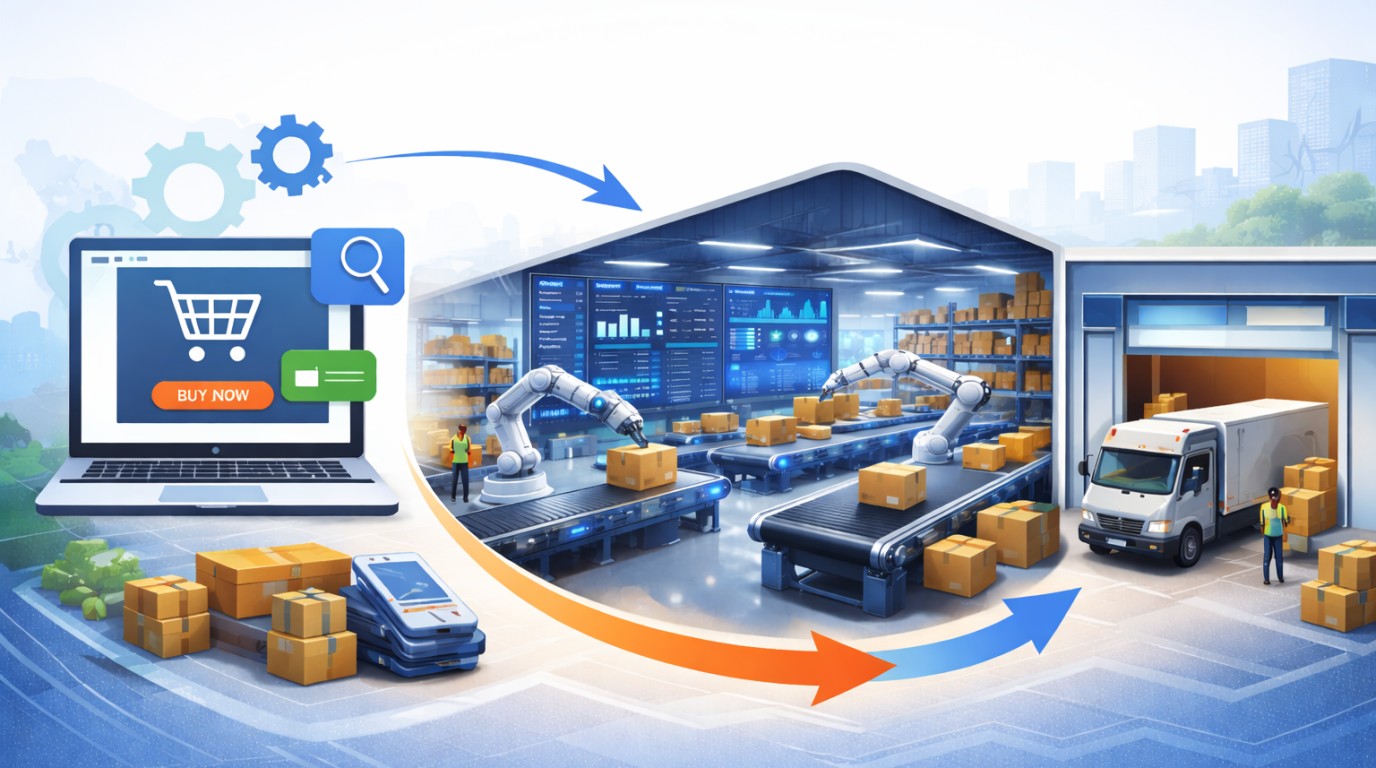
In 2026, customers expect same-day processing, real-time tracking, and zero order errors. However, many businesses still rely on semi-manual order workflows where checkout, payment confirmation, inventory updates, warehouse picking, and shipping are disconnected. This creates delays, stock mismatches, angry customers, and operational chaos.
Order Fulfillment Automation solves this by creating a seamless flow from checkout to warehouse dispatch - connecting payment gateways, inventory systems, warehouse management, and logistics providers into one automated pipeline.
The Problem: Manual Fulfillment at Scale
Imagine an e-commerce store receiving 1,000 orders per day during a festive sale. Orders are placed online, but inventory updates happen every 30 minutes. Warehouse teams receive Excel sheets instead of real-time dashboards. Shipping labels are created manually.
The result? Overselling products, delayed dispatch, and customer complaints. The business impact is measurable: increased operational cost from manual intervention, a 3-5% order error rate, delayed shipping affecting brand trust, refund losses due to inventory mismatch, and poor scalability during peak seasons.
Architecture: How a Modern Fulfillment Pipeline Works
A modern automated fulfillment architecture connects these components:
- Checkout Service
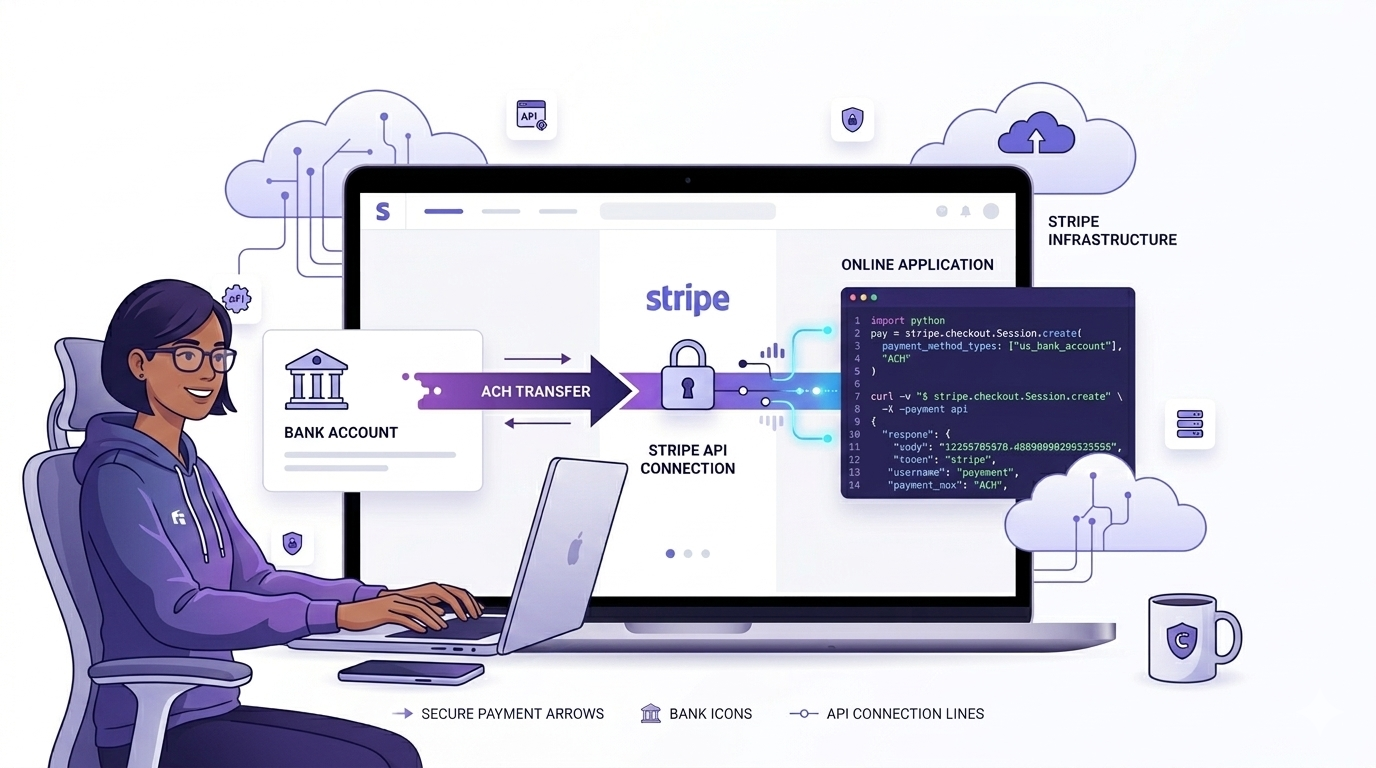
- Payment Gateway Integration (Stripe/PayPal/Razorpay)
- Order Processing Service
- Inventory Management Service
- Queue System (Redis/SQS)
- Warehouse Management System (WMS)
- Shipping API Integration
- Notification System
The flow: Customer buys → Checkout → Payment Gateway → Webhook → Order Service → Queue → Inventory Lock → WMS → Shipping API → Tracking Update → Customer Notification
Key Architectural Decisions
- Use asynchronous queues instead of synchronous processing
- Lock inventory immediately after payment confirmation
- Use idempotency keys to prevent duplicate orders
- Separate microservices for scalability
- Monitor webhook failures with retry logic
A Real-World Example: How Amazon Does It
John opens Amazon, finds his favourite protein powder on sale, and clicks "Buy Now." The checkout takes 30 seconds. But behind that click, Amazon's automated fulfillment system does the following - instantly, silently, without a single human manually handling his order:
Step 1 - Payment confirmed in milliseconds. The moment John's card is charged, the system receives a confirmation signal from the payment provider. The system automatically creates John's order record and moves it to the next stage in under one second.
Step 2 - That exact item is reserved for John. The system instantly checks which warehouse near John has the product in stock and puts a "reserved" tag on that specific unit. If 300 other people try to buy the last 100 units at the same moment, only the first 100 successful payments get reserved stock.
Step 3 - A warehouse worker gets the task on their handheld device. Inside the fulfilment centre, a worker's scanner beeps: "Go to Aisle 12, Rack C, Shelf 4. Pick 1x Whey Protein 2kg Chocolate." No spreadsheet. No paper list. The system told them exactly what to do and where to go.
Step 4 - Packing and shipping label happen automatically. Once the item is scanned at the packing station, the system prints the shipping label, assigns the order to the nearest available delivery partner, and generates a tracking number. Nobody typed John's address. Nobody called a courier.
Step 5 - John gets updates without asking. He receives an email: "Your order has been dispatched." Then a text when it is out for delivery. Every update was triggered automatically as the order moved through each stage.
Real Production Experience
During a major sale campaign, webhook delays caused 200 orders to remain in a pending state. The issue was Stripe webhook timeout due to server overload.
Fix: Moved webhook handling to a lightweight endpoint and queued heavy processing. Result: 40% reduction in processing time.
Other production improvements:
- Introduced Redis queues - reduced average processing time from 8 seconds to 2.5 seconds
- Database indexing on
order_status - Batch warehouse task creation
- Scaled system to handle 10,000 orders/day without downtime
Security and Cost Optimization
- Implemented signed webhook validation to prevent fraud
- Used rate limiting on the checkout endpoint
- Reduced AWS compute cost by 30% using queue workers instead of large EC2 instances
- Added automated reconciliation reports to reduce accounting effort
Conclusion
Order Fulfillment Automation is not just a technical upgrade - it is a business growth strategy. By automating the checkout-to-warehouse flow, companies reduce operational errors, improve delivery time, and scale confidently during peak seasons.
If your business processes more than 100 orders per day, automation is no longer optional. It directly impacts revenue, customer satisfaction, and brand trust.