Many products and services today operate on a subscription model. OTT platforms, SaaS tools, gym memberships, software products - the subscription-based model is everywhere. A user selects a plan - monthly, quarterly, or yearly - and the system automatically charges them on the renewal date and creates a new order.
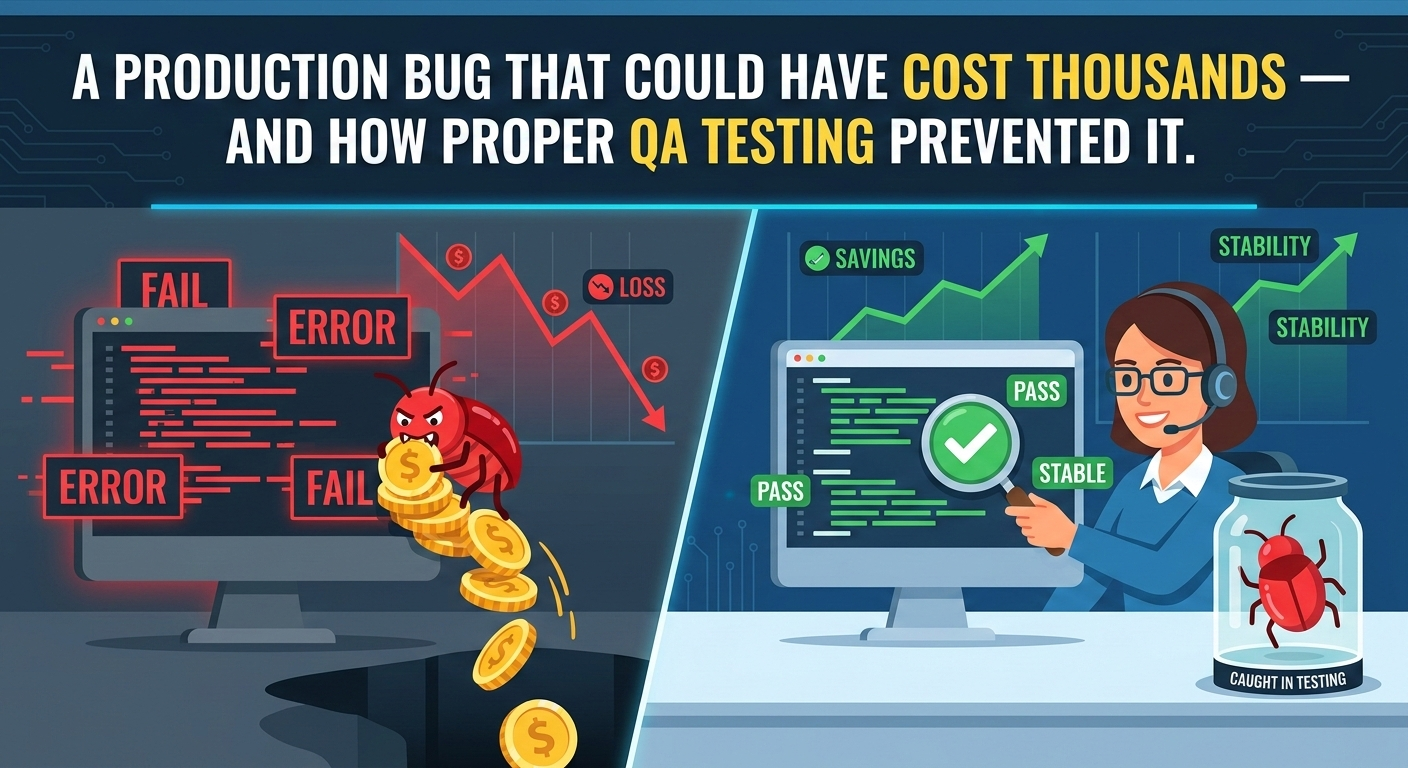
It sounds simple, but subscription billing systems are quite complex on the backend. If a bug reaches production at any step, the company could lose thousands. Here are the most common QA mistakes when testing subscription billing systems - and how to avoid them.
1. Not Verifying Order History
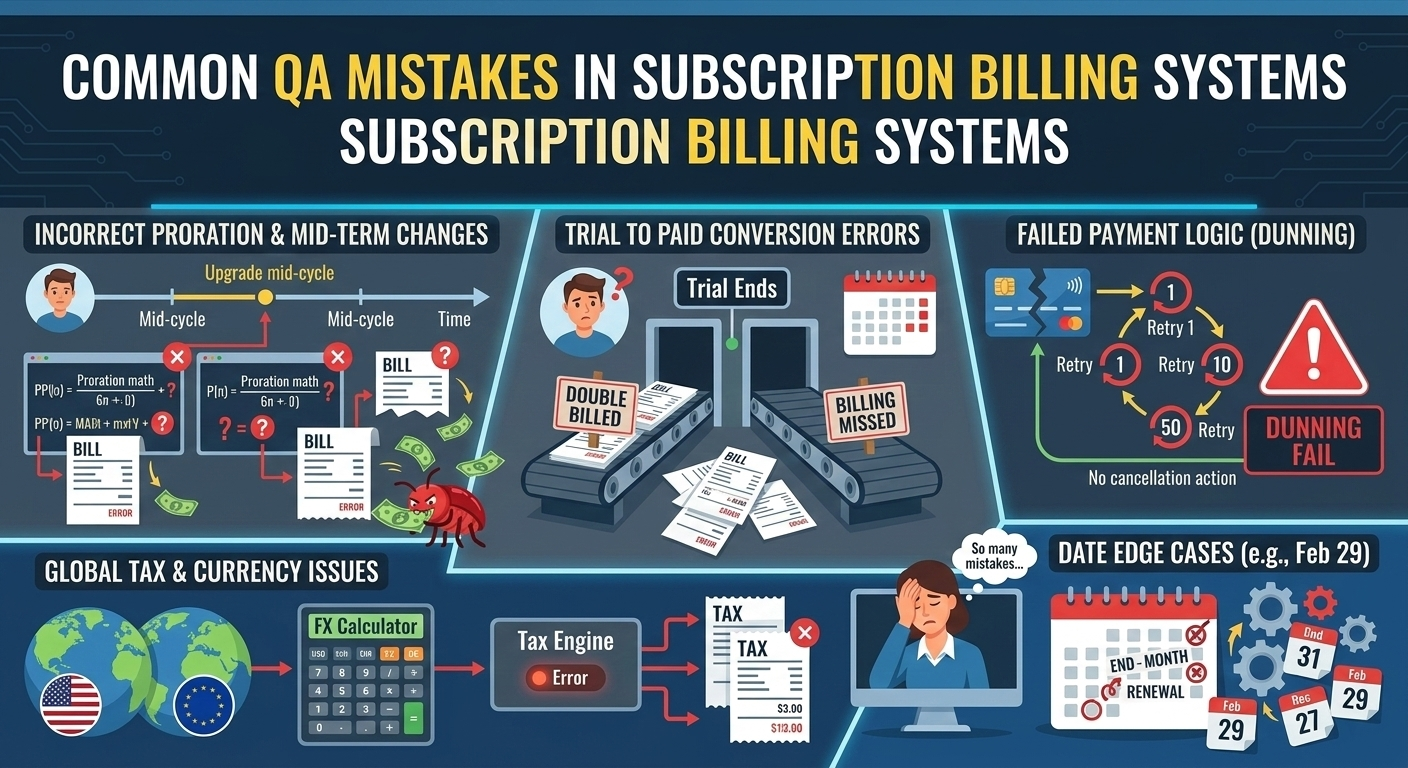
Sometimes QA considers the test complete after confirming the payment was successful. But order history verification is equally important. QA should check that every renewal creates exactly one order, that there are no duplicate entries, and that order statuses are shown correctly. If duplicate orders appear in order history, the billing system may generate confusion and double charges.
2. Testing Only the Purchase Flow
This is the most common mistake. QA checks that the user can purchase the subscription, the payment succeeds, and an order is created - then considers testing complete. But the real logic of a subscription system occurs at renewal time. The initial purchase happens only once. The actual risk lies in recurring renewals.
If a bug exists in the renewal jobs, duplicate orders may be created, double charges may occur, renewals may be missed entirely, or the wrong amount may be charged. QA should test the full subscription lifecycle, not just the purchase flow.
3. Ignoring Payment Failure Scenarios
During testing, most focus goes to successful payments. But in the real world, payment failures are common - card declined, insufficient balance, expired card, network issues, or bank server downtime.
QA should verify: Is there a retry mechanism? How many times does it retry? What is the retry interval? Is the user receiving notifications? What subscription status is displayed? Sometimes a payment fails but an order is still created, or multiple charges are applied during a payment retry. All these scenarios must be tested properly.
4. Taking the Cancellation Flow Lightly
When a user cancels a subscription, their trust depends on the system. If a user is still charged after cancellation, that trust is lost. Common issues include renewal triggering after cancellation, status showing as cancelled in the UI but still active in the backend, and future invoices being generated.
QA should verify that the status updates immediately after cancellation, the next renewal date is set to null, the renewal job ignores cancelled subscriptions, and no accidental orders are created.
5. Not Testing the Pause/Resume Feature Properly
Most modern subscription systems include a pause/resume feature - users can temporarily stop the service without cancelling. This functionality usually has the most logical complexity.
Common bugs include renewal triggering even after the subscription is paused, billing starting from the wrong date after resuming, incorrect pause duration calculation, and systems getting confused after multiple pause/resume actions.
For example: a user purchases a subscription on March 1st, pauses it on March 15th, and resumes on April 1st. The system must correctly calculate remaining days, the next renewal date, and whether the billing cycle shifts or remains the same. Test cases should cover pause before renewal, pause on the renewal date, resume before the next billing cycle, and multiple pause/resume actions.
6. Ignoring Date and Time Edge Cases
In subscription billing, date calculation is the trickiest part. Common issues include:
- Subscriptions created on the 31st of a month (February has no 31st)
- February and leap year handling
- Time zone differences (a UTC server vs. a user in IST may trigger renewal one day early or late)
- Daylight saving time adjustments
If QA does not test these scenarios, the renewal date may trigger on the wrong date and cause billing errors.
Conclusion
A subscription billing system is not simple. It is a continuously running system where data logic, payment processing, order creation, and background jobs all work together. Common QA mistakes - testing only the purchase flow, ignoring renewal scenarios, missing payment failures, taking cancellation and pause/resume lightly, and not verifying order history - can all lead to thousands of dollars in losses if they reach production.
The role of QA is not just to find bugs. It is to identify every possible risk in the system before it impacts real users. Proper QA testing ensures that a subscription system remains stable, reliable, and trustworthy.