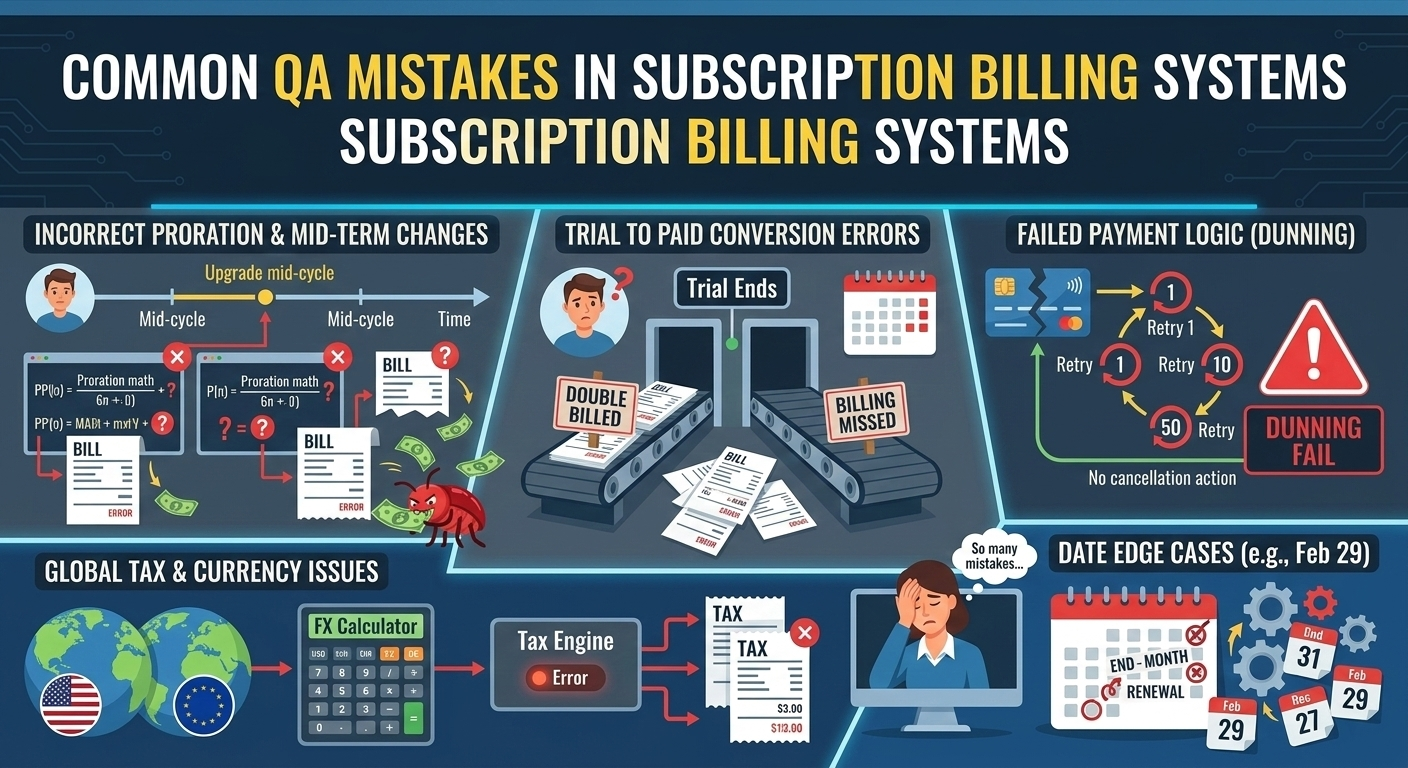
In recent years, many companies have adopted subscription-based models where users pay on a monthly or yearly basis. SaaS platforms, digital tools, and online services all commonly rely on this model. But a subscription billing system is far more complex than it looks - invoices, plan upgrades, renewals, and payment processing all work together, and a bug in any one of them can be costly.
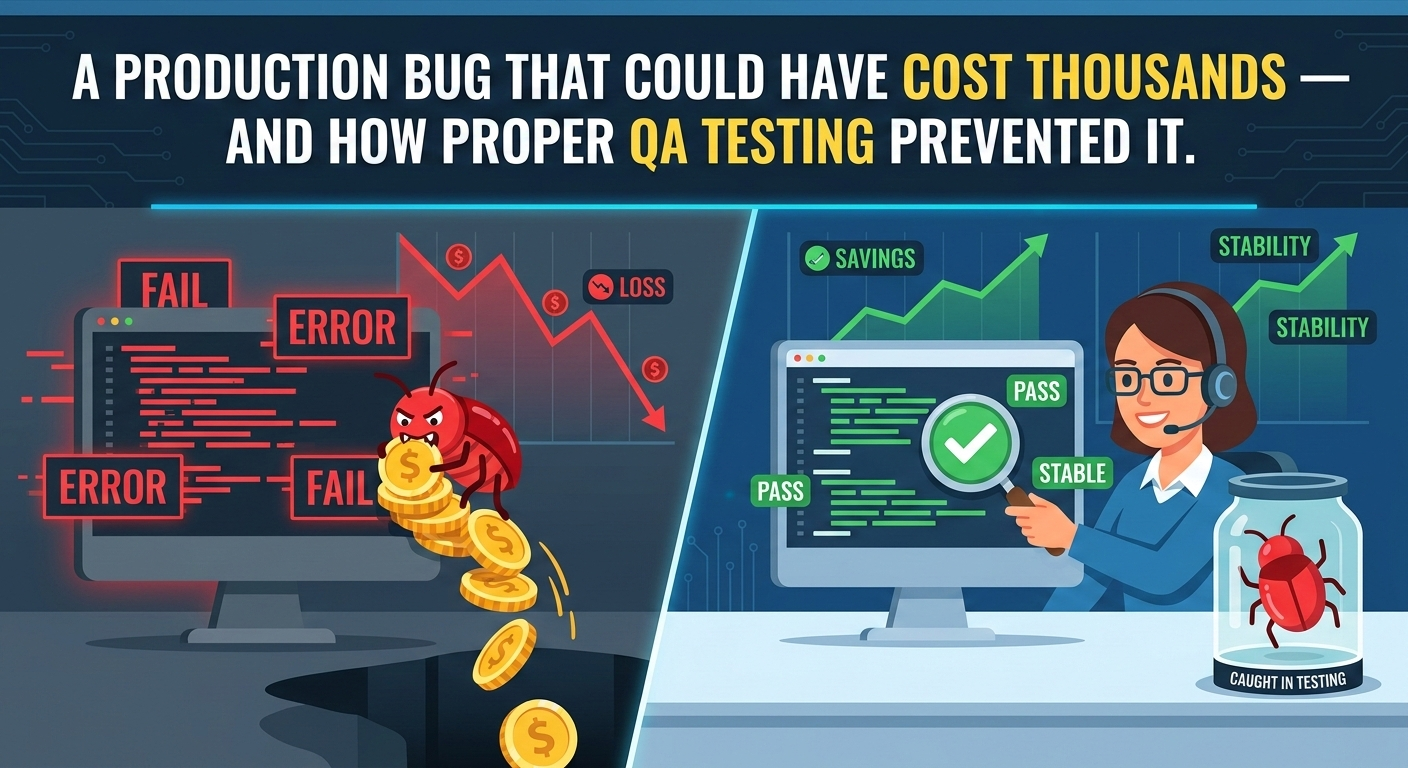
This blog covers a real testing scenario that could have caused thousands of dollars in losses if it had reached production.
The Problem
Users purchase a subscription, and the system automatically creates a new order on the renewal date. The expected flow looks like this:
- User purchases the subscription
- Subscription is stored in the database
- Renewal date is scheduled
- The system automatically generates a new order on the renewal date
During testing, the QA team noticed unexpected behaviour when verifying the renewal process. The system was generating multiple orders for a single renewal - meaning two orders were created for the same subscription renewal, and the customer was double-charged.
Real Scenario
A user purchases a monthly subscription at $30. When the renewal date arrives, the system should create exactly one new order and one invoice. Instead:
- Expected: 1 renewal → 1 new order → 1 invoice
- Actual: 1 renewal → 2 orders were being created
Business Impact
If this bug had gone into production, the consequences would have been severe:
- Users could have been double-charged
- Customer complaints and refund requests would have surged
- Accounting records would have been incorrect
- Customer trust would have been damaged
With 2,000 subscriptions renewing in a billing cycle, the system could have generated 2,000 extra duplicate orders - creating widespread billing confusion.
How QA Found the Issue
The QA team manually tested the renewal functionality across multiple scenarios:
- New subscription creation
- Subscription renewal after one month
- Payment success and payment retry cases
- Renewal data verification
During subscription testing, the QA team noticed that the order history was generating duplicate entries for the same subscription. Database logs were reviewed, and the duplicate order creation was confirmed.
Root Cause
After investigation, the development team found that the issue was in the renewal job processing logic. A background scheduler was triggering the same renewal process multiple times, causing duplicate renewal orders to be created for the same subscription.
Fix and Verification
After identifying the bug, the development team updated the renewal logic with the following improvements:
- Duplicate checks were added to the renewal process
- Subscription status validation was improved
- The system now verifies existing renewal orders before creating a new one
After the fix, the QA team re-tested across multiple scenarios - multiple subscription renewals, retry cases, payment failures, and order generation validation. The system now creates exactly one order per renewal.
Lessons Learned
- Background jobs must be tested carefully - duplicate execution issues can occur in scheduler-based systems
- Idempotency is critical in billing systems - the order creation process must handle duplicate execution gracefully
- Always verify database records, not just UI behaviour, during testing
Conclusion
The renewal process is a critical component of any subscription billing system. A bug in the renewal logic can create duplicate orders, incorrect billing, and financial inconsistencies. In this case, thorough QA testing detected the bug before it reached production, and the development team resolved it by updating the scheduler logic.
This example shows how proper QA testing plays a vital role in ensuring business systems are reliable - and can prevent real financial damage before it happens.