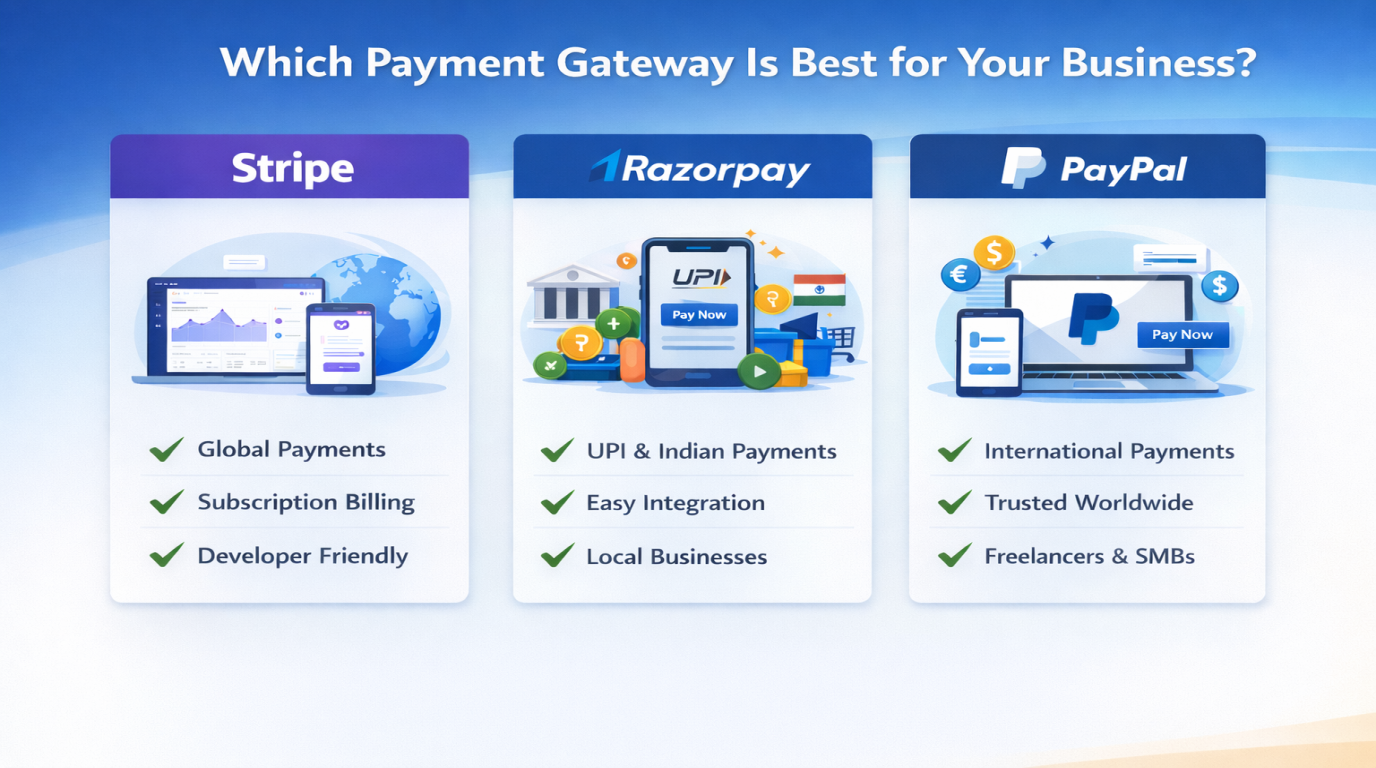
In today's digital economy, accepting online payments is essential for businesses. Whether you run an e-commerce store, SaaS platform, or online service, choosing the right payment gateway directly impacts your customer experience, revenue, and scalability.
Three of the most popular payment gateways used by businesses worldwide are Stripe, Razorpay, and PayPal. But which one is right for your business? In this guide, we compare these payment gateways, explore their strengths, and provide real-world examples to help you decide.
What Is a Payment Gateway?
A payment gateway is a technology that allows businesses to securely accept payments from customers online. It acts as a bridge between the customer, your website or application, and banking networks.
Payment gateways typically support:
- Credit and debit cards
- UPI payments
- Digital wallets
- International payments
Choosing the right gateway can influence transaction fees, checkout experience, and customer trust.
Stripe Overview
Stripe is a powerful global payment platform widely used by startups, SaaS companies, and technology businesses.
Key features include:
- Global payment support
- Advanced APIs for developers
- Subscription billing
- Multi-currency support
- Built-in fraud detection
Real-world example: A SaaS company offering monthly subscriptions uses Stripe to manage recurring billing, automatic invoices, and international payments.
Razorpay Overview
Razorpay is a leading payment gateway designed primarily for Indian businesses and startups. It supports popular local payment methods such as UPI, wallets, and net banking.
Key features include:
- UPI payments
- Card and wallet support
- Easy integration with websites and apps
- Subscription payment options
Real-world example: An Indian e-commerce brand selling clothing online uses Razorpay to accept payments via UPI, Google Pay, PhonePe, and debit cards.
PayPal Overview
PayPal is one of the most widely recognized online payment systems globally. Because of its strong brand reputation and buyer protection features, many customers trust PayPal for online payments.
Key features include:
- Global payment support
- Easy checkout buttons
- Strong buyer and seller protection
- Cross-border payment capability
Real-world example: A freelancer working with international clients receives payments quickly and securely through PayPal.
Comparison Summary
| Gateway | Best For |
|---|---|
| Stripe | Global SaaS and technology startups |
| Razorpay | Businesses operating primarily in India |
| PayPal | Freelancers and businesses with international clients |
Many growing companies integrate multiple payment gateways to provide flexibility and reduce payment failures.
Conclusion
Choosing the right payment gateway depends on your business model, customer location, and payment preferences.
- Stripe is ideal for global startups and SaaS platforms.
- Razorpay works best for Indian businesses accepting UPI payments.
- PayPal is trusted worldwide for international transactions.
Selecting the right gateway ensures secure payments, better customer experience, and smoother business operations.